
Roof Repair Around Exhaust Fans
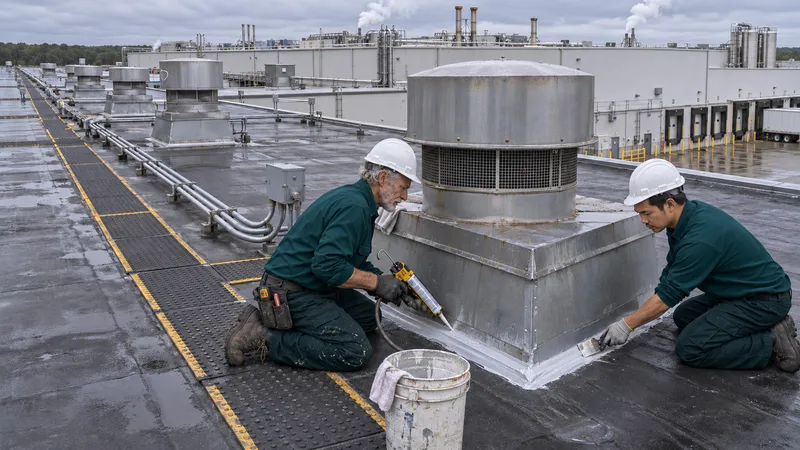
Softened membrane at the fan is cut out and replaced with a compatible product, the curb flashing is rebuilt, and a containment pad goes under the discharge.
As a Sioux City industrial roof repair contractor, we fix fan curbs, pipe supports, and residue-damaged membrane on plant and warehouse roofs around production schedules.
Roof Fit Check
Sioux City industrial roof repair covers large membrane and metal roofs carrying production equipment. Match your roof to the rows below.
| Roof Condition | Spot Repair | Section Repair | Plan Replacement |
|---|---|---|---|
| Softened membrane at one exhaust fan | Usually Fits | Sometimes | Rarely |
| Cracked flashing at a pipe support | Usually Fits | Sometimes | Rarely |
| Dock-wall flashing hit by a truck | Sometimes | Usually Fits | Rarely |
| Ponding across a large roof from clogged drains | Sometimes | Usually Fits | Rarely |
| Residue damage at many fans | Rarely | Usually Fits | Sometimes |
| Long seams opening across the field | Rarely | Sometimes | Usually Fits |
Plant Roof Problems
Industrial roofs wear in different places than office roofs. These conditions lead most plant repair lists.
Grease or chemical exhaust settles around fan curbs and softens some membranes until they blister, split, and leak at the curb.
Vibrating equipment and pipe racks work flashing loose at their bases, opening gaps around each support.
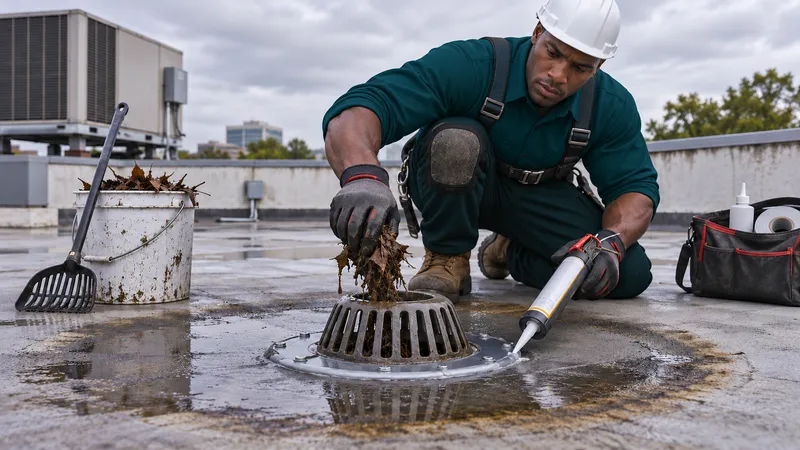
Big roof areas collect dust, packing debris, and leaves that clog drains, so water ponds across wide sections.
Truck and forklift impacts on dock-area walls crack parapet and wall flashing above the doors.
Membrane seams that run hundreds of feet open at stress points, especially where foot traffic crosses them.
Every skylight and smoke vent adds a curb and flashing that needs a regular check for cracks and lost sealant.
Repair Methods
Plant repairs use materials that hold up to residue, traffic, and equipment movement.
Softened membrane at the fan is cut out and replaced with a compatible product, the curb flashing is rebuilt, and a containment pad goes under the discharge.
Pipe stands and equipment rails get new flashing boots or pitch pockets sealed to the membrane around each leg.
Pads laid along routes to fans and units protect membrane from daily foot traffic and dropped tools.
Drains on large roofs get cleared, fitted with strainers, and checked for flow so water stops ponding across the field.
Cracked wall and parapet flashing above loading docks is replaced and counterflashed where truck impacts opened it.
Spring and fall visits clear drains, reseal penetrations, and log small repairs so they stay small.
Repair Or Replace
Large roofs are repaired in sections for years before a full replacement makes sense.
| What You Weigh | Repair | Replace |
|---|---|---|
| Equipment areas | Damage limited to the curbs and fans that need work. | Membrane softened or failed across most equipment zones. |
| Field membrane | Seams and field still bond outside repair areas. | Seams opening and membrane cracking across the field. |
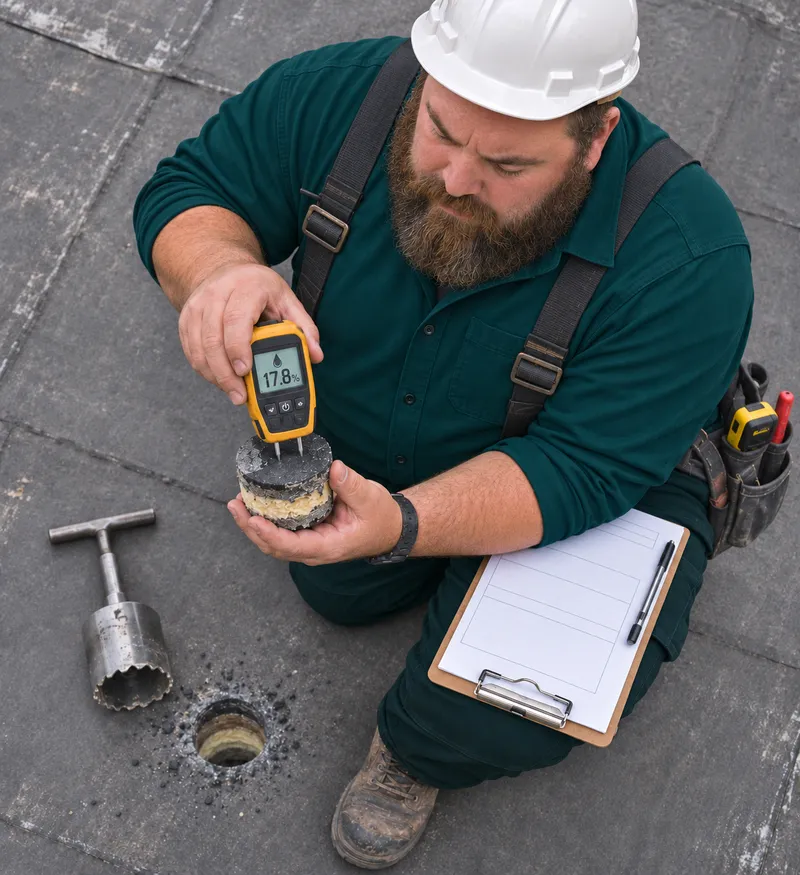
| Insulation | Wet board in pockets near leaks. | Wet readings across large sections of the roof. |
| Production impact | Short work windows in one area at a time. | Long phased project planned around production lines. |
| Planning | Repairs scheduled within the maintenance budget. | Capital project with a permit and phased schedule. |
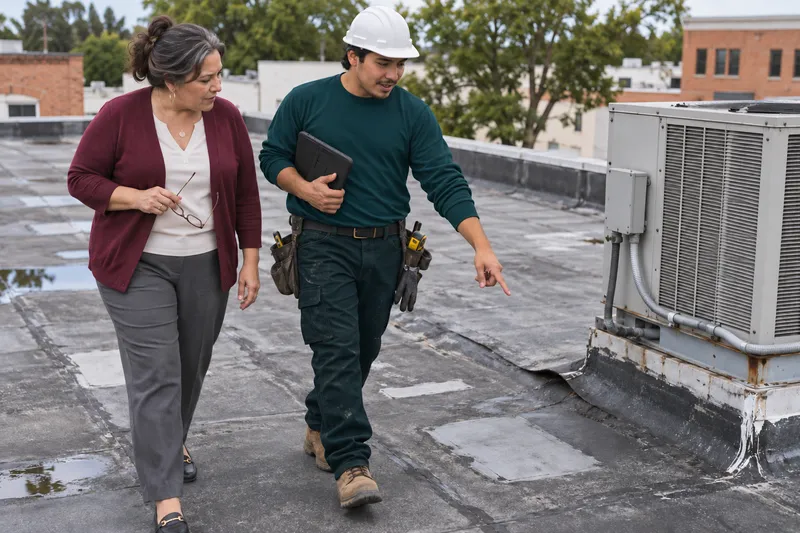
Tell us which line or area sits under the leak and what equipment is on the roof above it. Lockout and access get set before the crew arrives.
Plant Repair Stages
Industrial roof repairs run in five stages, with access and safety settled before any work starts.
We meet with plant staff to set roof access, lockout for rooftop equipment, work hours, and any sanitation or debris rules for food plants.
The crew walks the membrane, seams, fan curbs, pipe supports, drains, and skylights, then checks inside for deck rust and drips at columns.
Leaks over lines, electrical rooms, and stored product go first. Other repairs get grouped by roof area to keep each work window short.
Membrane, flashing, and curb repairs happen in the agreed window. Torch-applied work runs under the plant hot-work permit with a fire watch.
Each repair is photographed and logged by roof area, so the next inspection and the maintenance budget start from a current record.
Related Repairs
Plants often have office wings, metal additions, and leaks that need tracing before the repair.
Office and lab wings with membrane roofs need seam, drain, and flashing repairs that match their own system.
Flat roof repair in Sioux City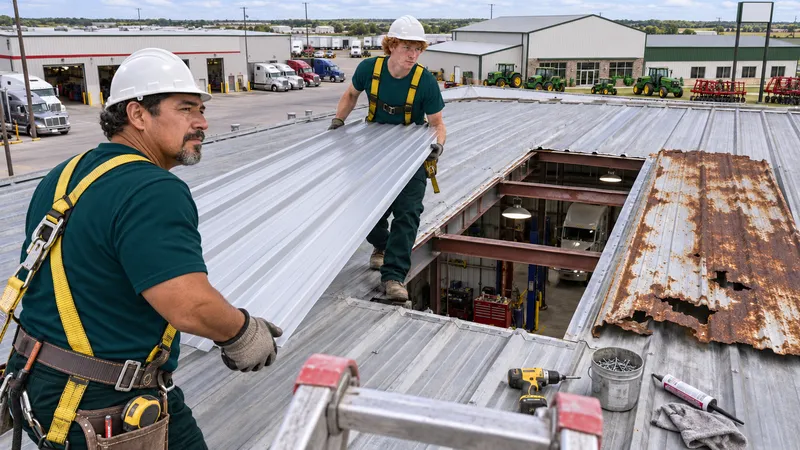
Steel storage buildings and shop additions on plant grounds leak at screws, end laps, and skylight panels.
Metal roof repair in Sioux City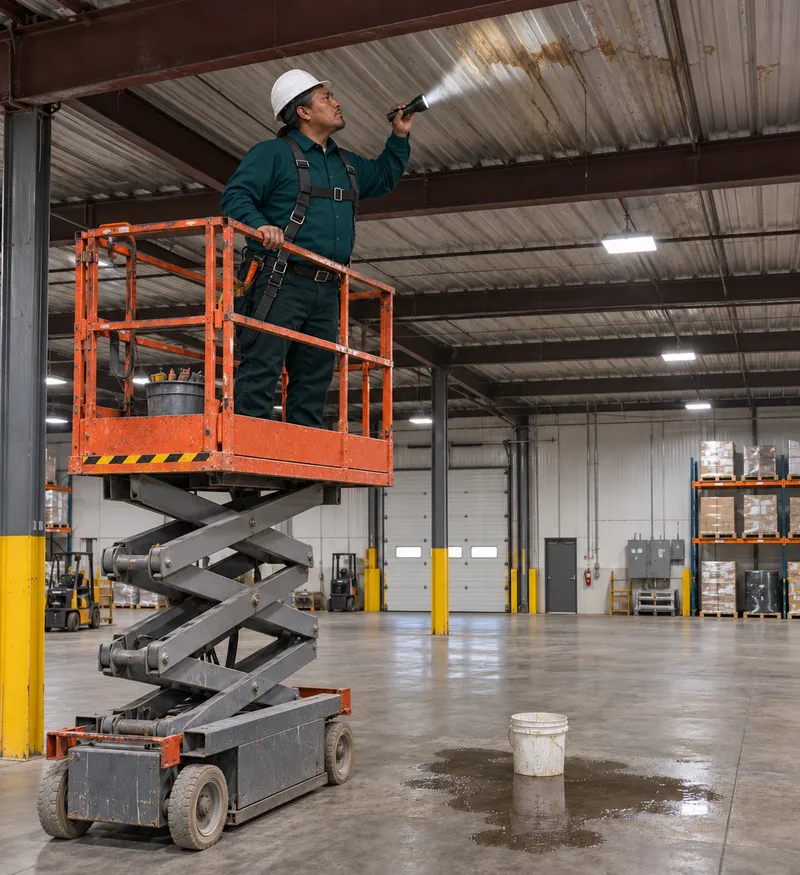
Drips over production areas get traced across the deck before the repair, so the fix lands where water enters.
Roof leak repair in Sioux CityPlant Roof Questions
Answers for plant managers and maintenance leads.
At the curb, the flashing, and the membrane next to the fan. Grease or chemical exhaust softens some membranes, so we clean the area, replace damaged membrane with a compatible product, and rebuild the curb flashing. A containment pad or trap keeps new residue off the roof.
Scheduled inspections, drain cleaning, and small repairs before they spread. We clear debris, check seams and flashings, reseal penetrations, and give extra attention to areas near exhaust, process piping, and equipment pads. Each visit is logged so you can plan the next budget.
At least twice a year and after major hail or wind. Roofs with heavy foot traffic, grease exhaust, or chemical exposure benefit from quarterly checks. Each inspection covers membrane, seams, flashings, drains, and curbs, plus a look inside for stains, deck rust, and drips at columns.
Access, lockout, work hours, and sanitation rules are set with plant staff before the crew arrives. Food plants can need covered work areas and controlled debris. Torch-applied repairs run under the plant hot-work permit with a fire watch.
Finished work can have to be opened for inspection. The Sioux City Inspection Services FAQ says coverings may need removing so an inspector can see the work, and any code violations found then must be corrected. We confirm permit needs before larger repairs.
Tell us the plant, the roof area, and what equipment sits on it. We will set access with your staff and inspect.