
Oversized Screws With New Washers
Stripped holes take a larger-diameter screw with a fresh washer, driven to the right depth so the washer seals without splitting.
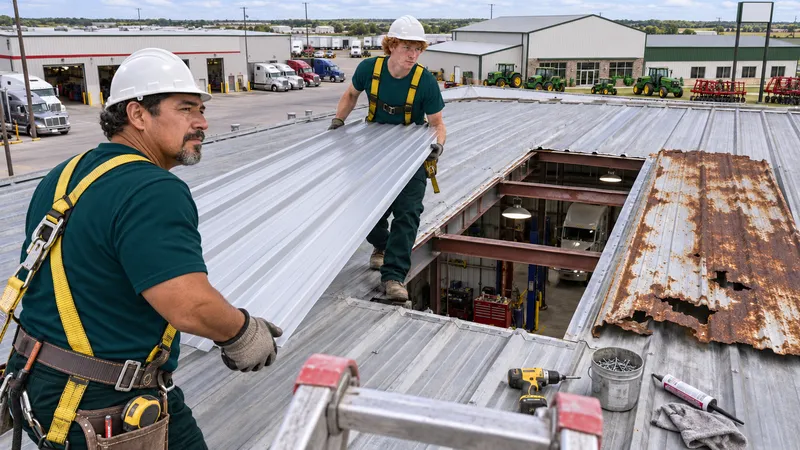
As a Sioux City commercial metal roof repair contractor, we replace loose screws, seal end laps, swap rusted panels, and fix flashing on steel buildings.
Roof Fit Check
Sioux City commercial metal roof repair covers exposed-fastener and standing seam roofs on shops, warehouses, and ag buildings. Match what you see to the rows below.
| Roof Condition | Fastener And Sealant Work | Panel Replacement | Plan A New Roof |
|---|---|---|---|
| Backed-out screws with worn washers | Usually Fits | Rarely | Rarely |
| Surface rust on an otherwise solid panel | Usually Fits | Sometimes | Rarely |
| Rust holes along one eave or end lap | Sometimes | Usually Fits | Rarely |
| Leaking skylight panel | Sometimes | Usually Fits | Rarely |
| Standing seam clips pulled loose | Sometimes | Usually Fits | Sometimes |
| Rust-through across most of the roof | Rarely | Sometimes | Usually Fits |
Metal Roof Problems
Steel roofs move every day as temperatures change, and these are the places that movement shows up first.
Thermal movement wallows out screw holes and splits rubber washers, so each screw becomes a small leak at the panel high rib.
Sealant tape between overlapping panel ends dries out, and water pulled back by wind and capillary action drips at the purlin line.
Snow and ice that sit at the eave keep the bottom of each panel wet, and rust eats through there before anywhere else.
Fiberglass skylight panels yellow, crack, and lose sealant at the laps, so they leak while the steel around them stays tight.
Trim where the roof meets a taller wall, and flashing around pipe and fan penetrations, opens as fasteners loosen.
Sheets of snow sliding off a metal roof can tear gutters, bend eave trim, and pull fasteners near the edge.
Repair Methods
Metal repairs keep the steel that still has life and replace only what has failed.
Stripped holes take a larger-diameter screw with a fresh washer, driven to the right depth so the washer seals without splitting.
End and side laps are cleaned, butyl tape is reset when panels can be lifted, and laps that stay shut get a reinforced fabric and mastic cover.
Panels rusted through are removed and replaced with new steel in the same profile and gauge so laps line up with the old sheets.
Cracked fiberglass skylight panels are replaced to match the rib profile, with new closures and lap sealant at both ends.
Loose ridge caps, endwall trim, and sidewall flashing are refastened or replaced, with closures that keep wind-driven snow out.
Holes left by removed signs, vents, or equipment are sealed and covered with a metal patch fastened into solid panel.
Repair Or Re-Sheet
Most metal roofs need fastener and lap work long before the panels themselves are done.
| What You Weigh | Repair | Replace |
|---|---|---|
| Fasteners | Loose or worn screws in sections of the roof. | Fastener holes wallowed out across the whole roof. |
| Panels | Rust holes in a few sheets near the eave or laps. | Rust-through or thin steel across most panels. |
| Laps | Dry sealant at end laps that can be reset or covered. | Laps corroded open on most runs. |
| Structure | Purlins and clips solid under the leak. | Purlin rust or clip failure that needs framing work. |
| Time on site | A day or a few days in one area. | Weeks, with the building permit and material order. |
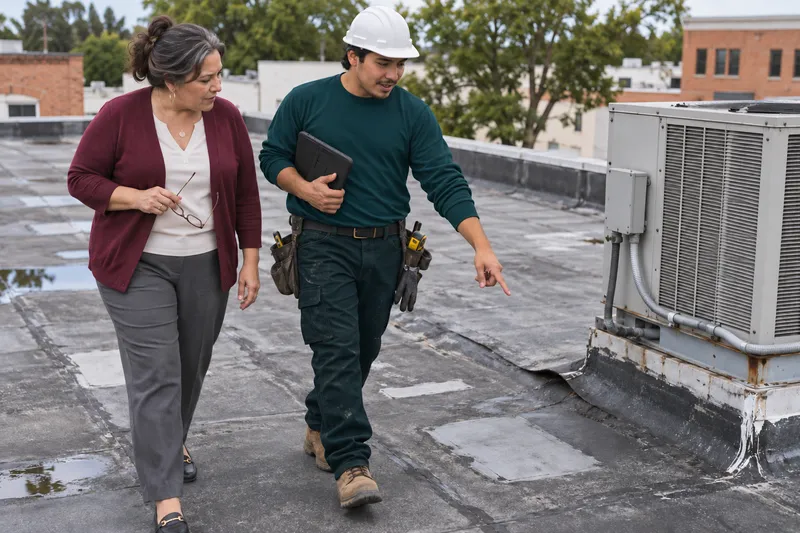
Drips along a straight line on a metal building usually trace to an end lap or screw row. Tell us where the line runs.
Repair Stages
Metal roof repairs follow five stages, from the screw count to the final check of washers and trim.
Each fastener row in the leak area gets checked by hand for looseness and cracked washers. Neighboring screws loosen too, so the check runs beyond the obvious leak.
End laps and side laps near the leak get inspected for dried tape, rust, and gaps. Where a lap can be lifted, we look at the sealant inside before choosing the repair.
Surface rust gets cleaned and treated. Panels with holes, crumbling laps, or rust along the purlin line are marked for replacement with matching steel.
New panels go in at the same profile and gauge, laps get fresh butyl tape, and loose screws are replaced with oversized fasteners and new washers.
Ridge caps, wall trim, skylight laps, and gutters get a final look and new fasteners where needed. Photos of each repaired row go into your roof record.
Related Repairs
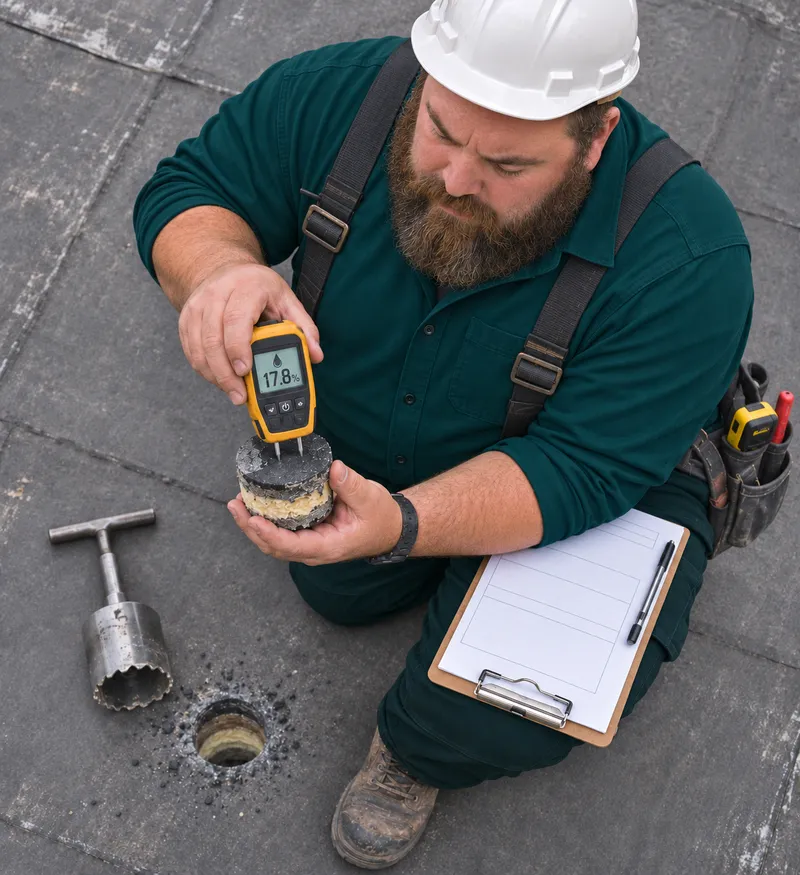
Metal buildings often share a roof line with a flat office section or house equipment that needs its own repair.
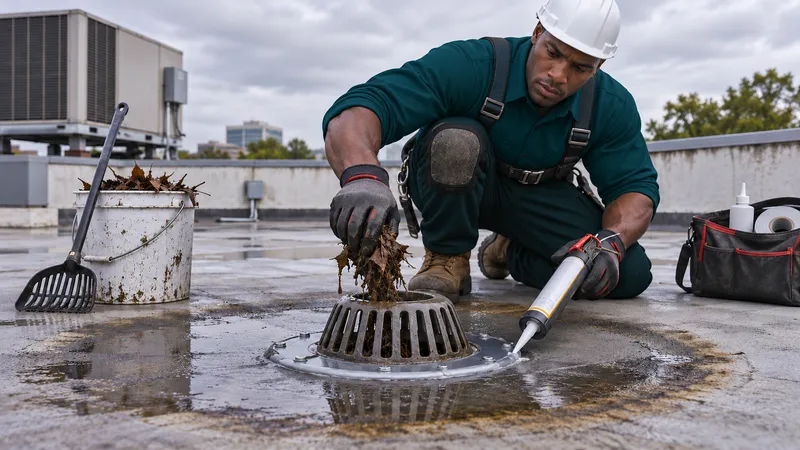
Office wings with membrane roofs beside a steel shop leak at the seams, drains, and the wall where the two roofs meet.
Flat roof repair in Sioux City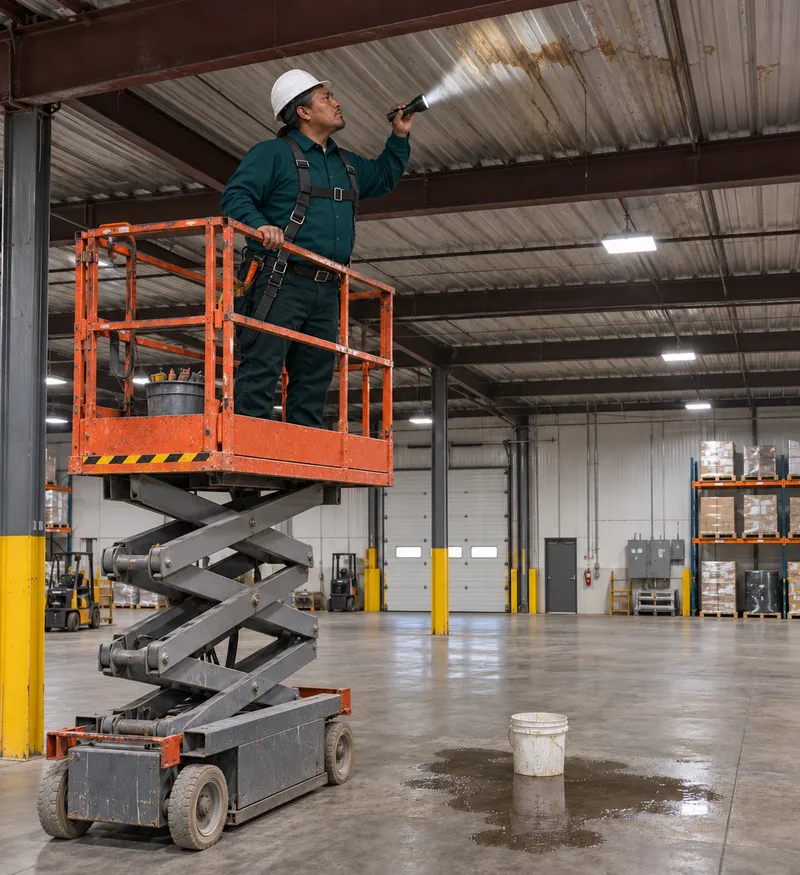
When drips land far from any visible screw or lap, leak tracing follows the water back along the purlins to the entry point.
Roof leak repair in Sioux City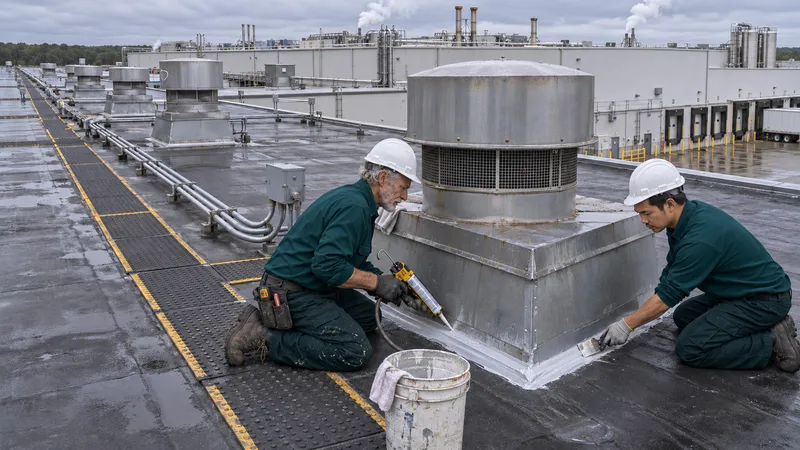
Metal plant roofs with exhaust fans and process piping need curb and penetration repairs scheduled around production.
Industrial roof repair in Sioux CityMetal Roof Questions
Answers about screws, rust, laps, cost, and permits on steel roofs.
Replace the worn fastener and seal the hole. A stripped hole takes an oversized screw with a new washer, and an empty hole left by removed equipment gets sealed and covered with a fastened metal patch. We check every screw around the leak, because the neighbors usually loosen at the same rate.
Loose fasteners, dried sealant at end laps, and gaps in wall and penetration flashing cause most of them. Daily temperature swings move the panels, which wears washers and loosens screws. Ridge caps and skylight panels leak as their sealant ages, and sliding snow tears gutters and eave trim.
When the rust has gone through the steel or weakened the ribs. Surface rust on a solid panel gets cleaned and treated in place. Holes, crumbling laps, or rust along the purlin line mean new metal, cut to the same profile and gauge so it laps correctly with the old sheets.
The count of fasteners, laps, and panels that need work sets most of it. New panels cost more than resealing because the steel has to match the existing profile. Roof height, slope, snow guards, and rooftop units change the labor, and treating rust over a large area adds time and material.
Larger work does. Sioux City requires a permit for construction regulated by its building code and adopted the 2024 International Existing Building Code for repairs to existing buildings. Small screw and sealant work is often treated differently than panel or deck replacement, so we confirm the scope with Sioux City Inspection Services first.
Tell us the building type and where the drips land. We will check the screw rows, laps, and panels and write the repair list.