
TPO Seam Rewelding
Hot-air welding fuses a cleaned TPO seam or a new cover strip, and every weld is probed along its length once it cools.
As a Sioux City flat roof repair contractor, we fix seams, drains, ponding, and wall flashing on TPO, EPDM, built-up, and modified bitumen roofs.
Roof Fit Check
Sioux City flat roof repair fits most low-slope membrane roofs with damage in a few places. Find the condition you see in the rows below.
| Roof Condition | Patch The Membrane | Rebuild The Area | Plan A New Roof |
|---|---|---|---|
| A split seam or puncture with dry board around it | Usually Fits | Sometimes | Rarely |
| Ponding at a clogged or sunken drain | Sometimes | Usually Fits | Rarely |
| Blisters on an older built-up roof | Sometimes | Usually Fits | Sometimes |
| Wall flashing pulled loose at a parapet | Usually Fits | Sometimes | Rarely |
| Shrinking EPDM pulling at the corners | Rarely | Sometimes | Usually Fits |
| Wet insulation across several bays | Rarely | Sometimes | Usually Fits |
Flat Roof Problems
Low-slope roofs fail in predictable places. These are the conditions that bring most flat roof repair calls.
Water that sits for days softens membrane, collects dirt, and finds every pinhole. The fix is the drain, a cricket, or a reset deck, plus new membrane where ponding wore it.
TPO welds and EPDM tape seams open at corners and T-joints first, especially where foot traffic crosses them near rooftop units.
Membrane run up a parapet wall pulls away as adhesive ages, leaving an open lip where wind-driven rain gets behind it.
Bubbles in a gravel or smooth built-up roof mean trapped air or moisture between plies. Small blisters get cut and patched before they split.
When water rises above a weak lap or wall coping during a storm, a leak shows up that dry-weather checks miss.
Sioux City design criteria list a -7°F winter design temperature, and ice that forms in seams widens small openings every winter.
Repair Methods
Each membrane type takes its own repair material. Here is what goes on the roof for the common problems.
Hot-air welding fuses a cleaned TPO seam or a new cover strip, and every weld is probed along its length once it cools.
Aged EPDM is scrubbed and primed so seam tape or a cured patch bonds instead of peeling off at the first freeze.
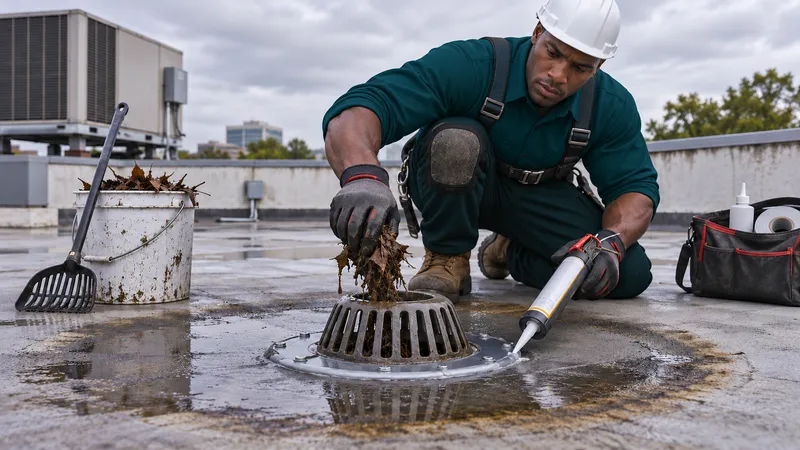
Clamping rings come off, the bowl is cleaned, and cracked bowls, missing strainers, or torn drain flashing are replaced.
Low spots near drains get tapered insulation or a recessed sump so water runs to the outlet instead of sitting on the field.
Loose wall membrane is reattached under a new termination bar and sealed, with counterflashing reset over it.
Saturated insulation under a leak is cut out, the deck is checked, and new board and membrane go back in.
Patch Or Replace
Flat roof patch vs replacement comes down to the membrane around the damage and the insulation under it.
| What You Weigh | Repair | Replace |
|---|---|---|
| Membrane condition | Still flexible and well bonded around the damage. | Brittle, shrinking, or cracking across the field. |
| Insulation | Dry beyond a small area around the leak. | Wet across several bays or most of the roof. |
| Drainage | Clogged drains or one low spot that a cricket fixes. | Deck sag or slope problems across the whole roof. |
| Repair history | A few patches that are holding. | Patches on top of patches that keep failing. |
| Time on site | Hours to a few days in one area. | Weeks, with tear-off and a building permit. |
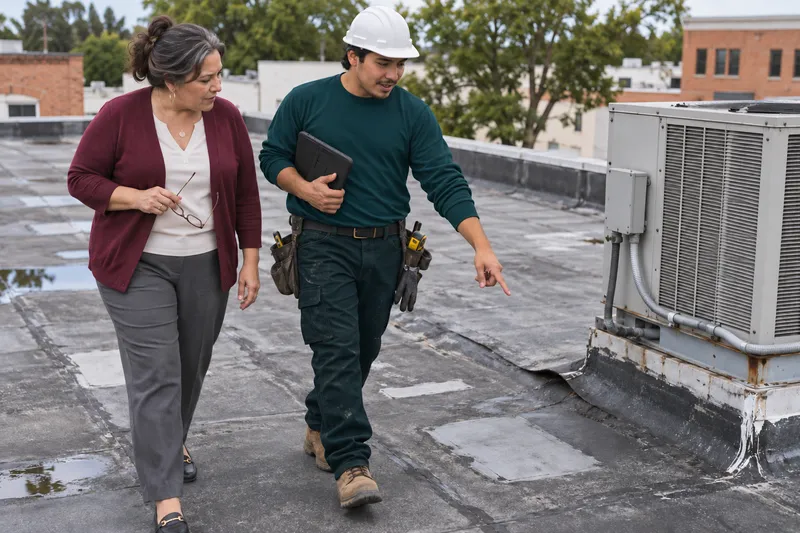
Send a photo of the ponding or tell us which drain backs up. Clearing it now keeps the membrane from wearing through.
Repair Stages
Flat roofs get the same five stages each time, with the drains checked before any patch goes down.
Clogged strainers and scuppers get cleared so the roof drains before we look for damage. Water that stays after clearing points to a slope or deck problem rather than debris.
A seam probe runs along welds and tape seams near the leak, at T-joints, and around curbs. Base flashing at parapets is pulled gently to find where adhesive has let go.
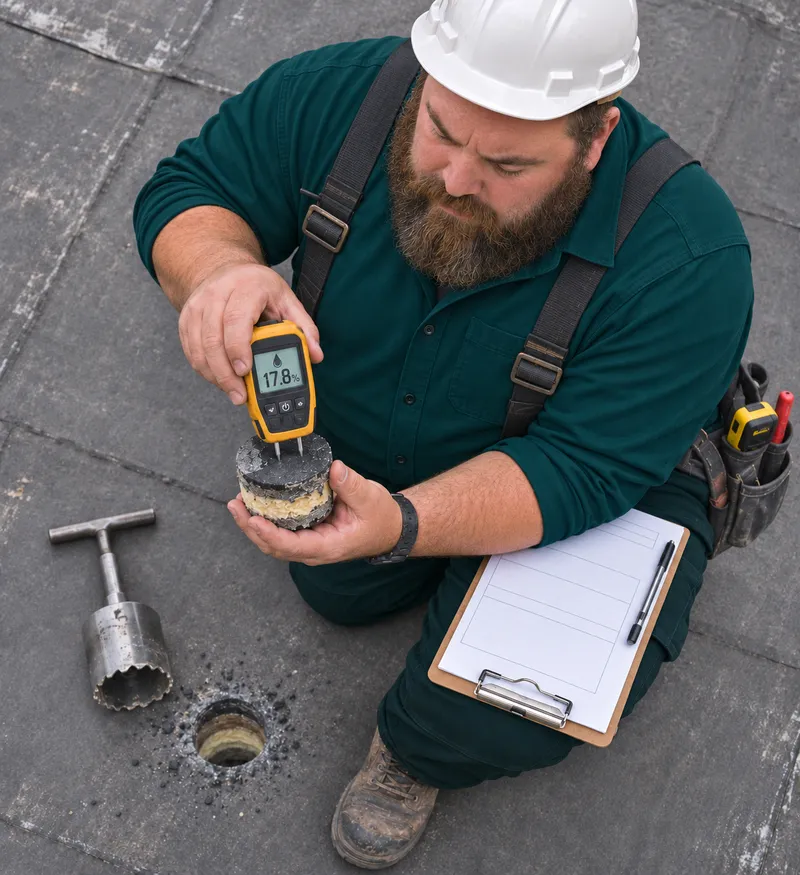
Moisture readings and core cuts show how far water has spread under the membrane. Wet board gets marked so the repair covers the whole wet area along with the visible tear.
The repair uses the same membrane family as the roof: welded TPO, primed EPDM, or modified bitumen plies. Wet board is replaced first, then the membrane closes over it.
Each repaired drain is flushed with a hose to confirm flow, and every patch and seam is photographed. You get the photos with a note on any area to watch next spring.
Related Repairs
Flat roof jobs often turn up a second problem: a metal addition, a leak that traces elsewhere, or plant equipment on the roof.
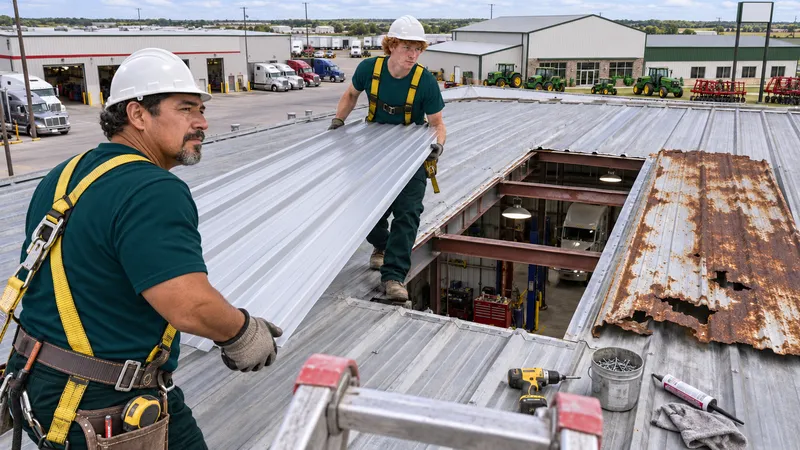
Shop additions with metal panels next to a flat roof office leak at the screw rows and the wall where the two roofs meet.
Metal roof repair in Sioux City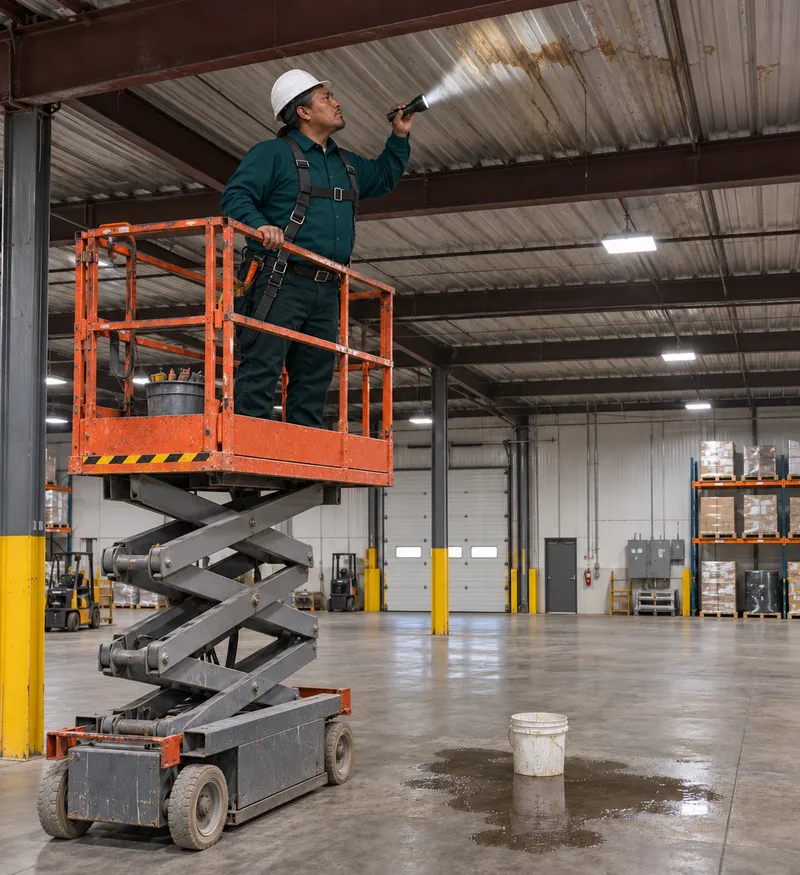
A ceiling stain that keeps coming back after a flat roof patch usually means the water enters somewhere else upslope.
Roof leak repair in Sioux City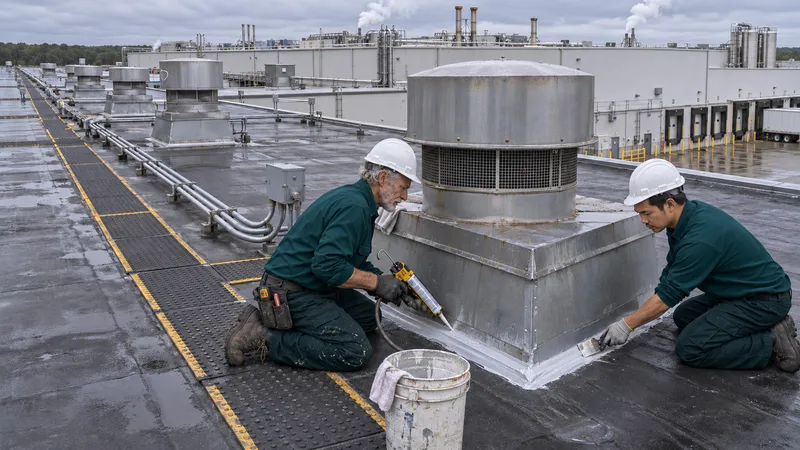
Flat plant roofs with exhaust fans and pipe racks need membrane repair that holds up to residue and rooftop foot traffic.
Industrial roof repair in Sioux CityFlat Roof Questions
Short answers about ponding, patches, drains, and cost on low-slope roofs.
By fixing why water stays put. We clear and reset the drain, then add a tapered cricket or a drain sump where a low spot holds water. If the deck itself sags, it gets checked for damage before new insulation goes in. Membrane worn thin by standing water is patched or replaced in that area.
A drain repair starts with the clamping ring off and the bowl cleaned out. Cracked bowls, missing strainers, and failed bolts get replaced, and new membrane flashing goes around the bowl. We also run water down the line to check for a clog that backs up onto the roof, and look at the overflow scuppers on the same trip.
A patch works when the damage is local and the membrane around it still bends and bonds. Patches fail on membrane that has gone brittle, shrunk from the walls, or soaked through. Core samples and moisture readings near the damage tell us which case you have, and a roof covered in old patches is the sign to start planning replacement.
Membrane type, repair size, and wet insulation set most of it. Built-up and modified bitumen roofs take different materials than TPO or EPDM, and aged membrane often needs cleaning and primer before a patch bonds. Drain rebuilds and new crickets add work beyond a simple patch.
Because the water level rises above a weak point that stays dry in light rain. Slow drains let water climb against base flashing, open laps, and parapet seams, and wind pushes rain under wall copings. We clear the drains first, then check every flashing at the height storm water reaches.
Tell us the membrane type if you know it and where water collects or comes through. We will inspect and write the repair list.